Sunday, August 16, 2020

A MADISON SQUARE ARABIAN NIGHT - by O. Henry


https://www.assignmentpoint.com/wp-content/uploads/2020/01/A-Madison-Square-Arabian-Night.jpg


To Carson Chalmers, in his apartment near the square, Phillips brought the evening mail. Beside the routine correspondence there were two items bearing the same foreign postmark.

One of the incoming parcels contained a photograph of a woman. The other contained an interminable letter, over which Chalmers hung, absorbed, for a long time. The letter was from another woman; and it contained poisoned barbs, sweetly dipped in honey, and feathered with innuendoes concerning the photographed woman.

Chalmers tore this letter into a thousand bits and began to wear out his expensive rug by striding back and forth upon it. Thus an animal from the jungle acts when it is caged, and thus a caged man acts when he is housed in a jungle of doubt.

By and by the restless mood was overcome. The rug was not an enchanted one. For sixteen feet he could travel along it; three thousand miles was beyond its power to aid.

Phillips appeared. He never entered; he invariably appeared, like a well-oiled genie.

"Will you dine here, sir, or out?" he asked.

"Here," said Chalmers, "and in half an hour." He listened glumly to the January blasts making an Aeolian trombone of the empty street.

"Wait," he said to the disappearing genie. "As I came home across the end of the square I saw many men standing there in rows. There was one mounted upon something, talking. Why do those men stand in rows, and why are they there?"

"They are homeless men, sir," said Phillips. "The man standing on the box tries to get lodging for them for the night. People come around to listen and give him money. Then he sends as many as the money will pay for to some lodging-house. That is why they stand in rows; they get sent to bed in order as they come."

"By the time dinner is served," said Chalmers, "have one of those men here. He will dine with me."

"W-w-which ," began Phillips, stammering for the first time during his service.

"Choose one at random," said Chalmers. "You might see that he is reasonably sober and a certain amount of cleanliness will not be held against him. That is all."

It was an unusual thing for Carson Chalmers to play the Caliph. But on that night he felt the inefficacy of conventional antidotes to melancholy. Something wanton and egregious, something high-flavored and Arabian, he must have to lighten his mood.

On the half hour Phillips had finished his duties as slave of the lamp. The waiters from the restaurant below had whisked aloft the delectable dinner. The dining table, laid for two, glowed cheerily in the glow of the pink-shaded candles.

And now Phillips, as though he ushered a cardinalor held in charge a burglarwafted in the shivering guest who had been haled from the line of mendicant lodgers.

It is a common thing to call such men wrecks; if the comparison be used here it is the specific one of a derelict come to grief through fire. Even yet some flickering combustion illuminated the drifting hulk. His face and hands had been recently washeda rite insisted upon by Phillips as a memorial to the slaughtered conventions. In the candle-light he stood, a flaw in the decorous fittings of the apartment. His face was a sickly white, covered almost to the eyes with a stubble the shade of a red Irish setter's coat. Phillips's comb had failed to control the pale brown hair, long matted and conformed to the contour of a constantly worn hat. His eyes were full of a hopeless, tricky defiance like that seen in a cur's that is cornered by his tormentors. His shabby coat was buttoned high, but a quarter inch of redeeming collar showed above it. His manner was singularly free from embarrassment when Chalmers rose from his chair across the round dining table.

"If you will oblige me," said the host, "I will be glad to have your company at dinner."

"My name is Plumer," said the highway guest, in harsh and aggressive tones. "If you're like me, you like to know the name of the party you're dining with."

"I was going on to say," continued Chalmers somewhat hastily, "that mine is Chalmers. Will you sit opposite?"

Plumer, of the ruffled plumes, bent his knee for Phillips to slide the chair beneath him. He had an air of having sat at attended boards before. Phillips set out the anchovies and olives.

"Good!" barked Plumer; "going to be in courses, is it? All right, my jovial ruler of Bagdad. I'm your Scheherezade all the way to the toothpicks. You're the first Caliph with a genuine Oriental flavor I've struck since frost. What luck! And I was forty-third in line. I finished counting, just as your welcome emissary arrived to bid me to the feast. I had about as much chance of getting a bed to-night as I have of being the next President. How will you have the sad story of my life, Mr. Al Raschida chapter with each course or the whole edition with the cigars and coffee?"

"The situation does not seem a novel one to you," said Chalmers with a smile.

"By the chin whiskers of the prophetno!" answered the guest. "New York's as full of cheap Haroun al Raschids as Bagdad is of fleas. I've been held up for my story with a loaded meal pointed at my head twenty times. Catch anybody in New York giving you something for nothing! They spell curiosity and charity with the same set of building blocks. Lots of 'em will stake you to a dime and chop-suey; and a few of 'em will play Caliph to the tune of a top sirloin; but every one of 'em will stand over you till they screw your autobiography out of you with foot notes, appendix and unpublished fragments. Oh, I know what to do when I see victuals coming toward me in little old Bagdad-on-the-Subway. I strike the asphalt three times with my forehead and get ready to spiel yarns for my supper. I claim descent from the late Tommy Tucker, who was forced to hand out vocal harmony for his pre-digested wheaterina and spoopju."

"I do not ask your story," said Chalmers. "I tell you frankly that it was a sudden whim that prompted me to send for some stranger to dine with me. I assure you you will not suffer through any curiosity of mine."

"Oh, fudge!" exclaimed the guest, enthusiastically tackling his soup; "I don't mind it a bit. I'm a regular Oriental magazine with a red cover and the leaves cut when the Caliph walks abroad. In fact, we fellows in the bed line have a sort of union rate for things of this sort. Somebody's always stopping and wanting to know what brought us down so low in the world. For a sandwich and a glass of beer I tell 'em that drink did it. For corned beef and cabbage and a cup of coffee I give 'em the hard-hearted-landlordsix-months-in-the-hospital-lost-job story. A sirloin steak and a quarter for a bed gets the Wall Street tragedy of the swept-away fortune and the gradual descent. This is the first spread of this kind I've stumbled against. I haven't got a story to fit it. I'll tell you what, Mr. Chalmers, I'm going to tell you the truth for this, if you'll listen to it. It'll be harder for you to believe than the made-up ones."

An hour later the Arabian guest lay back with a sigh of satisfaction while Phillips brought the coffee and cigars and cleared the table.

"Did you ever hear of Sherrard Plumer?" he asked, with a strange smile.

"I remember the name," said Chalmers. "He was a painter, I think, of a good deal of prominence a few years ago."

"Five years," said the guest. "Then I went down like a chunk of lead. I'm Sherrard Plumer! I sold the last portrait I painted for $2,000. After that I couldn't have found a sitter for a gratis picture."

"What was the trouble?" Chalmers could not resist asking.

"Funny thing," answered Plumer, grimly. "Never quite understood it myself. For a while I swam like a cork. I broke into the swell crowd and got commissions right and left. The newspapers called me a fashionable painter. Then the funny things began to happen. Whenever I finished a picture people would come to see it, and whisper and look queerly at one another."

"I soon found out what the trouble was. I had a knack of bringing out in the face of a portrait the hidden character of the original. I don't know how I did itI painted what I sawbut I know it did me. Some of my sitters were fearfully enraged and refused their pictures. I painted the portrait of a very beautiful and popular society dame. When it was finished her husband looked at it with a peculiar expression on his face, and the next week he sued for divorce."

"I remember one case of a prominent banker who sat to me. While I had his portrait on exhibition in my studio an acquaintance of his came in to look at it. 'Bless me,' says he, 'does he really look like that?" I told him it was considered a faithful likeness. 'I never noticed that expression about his eyes before,' said he; 'I think I'll drop downtown and change my bank account.' He did drop down, but the bank account was gone and so was Mr. Banker.

"It wasn't long till they put me out of business. People don't want their secret meannesses shown up in a picture. They can smile and twist their own faces and deceive you, but the picture can't. I couldn't get an order for another picture, and I had to give up. I worked as a newspaper artist for a while, and then for a lithographer, but my work with them got me into the same trouble. If I drew from a photograph my drawing showed up characteristics and expressions that you couldn't find in the photo, but I guess they were in the original, all right. The customers raised lively rows, especially the women, and I never could hold a job long. So I began to rest my weary head upon the breast of Old Booze for comfort. And pretty soon I was in the free-bed line and doing oral fiction for hand-outs among the food bazaars. Does the truthful statement weary thee, O Caliph? I can turn on the Wall Street disaster stop if you prefer, but that requires a tear, and I'm afraid I can't hustle one up after that good dinner."

"No, no," said Chalmers, earnestly, "you interest me very much. Did all of your portraits reveal some unpleasant trait, or were there some that did not suffer from the ordeal of your peculiar brush?"

"Some? Yes," said Plumer. "Children generally, a good many women and a sufficient number of men. All people aren't bad, you know. When they were all right the pictures were all right. As I said, I don't explain it, but I'm telling you facts."

On Chalmers's writing table lay the photograph that he had received that day in the foreign mail. Ten minutes later he had Plumer at work making a sketch from it in pastels. At the end of an hour the artist rose and stretched wearily.

"It's done," he yawned. "You'll excuse me for being so long. I got interested in the job. Lordy! but I'm tired. No bed last night, you know. Guess it'll have to be good night now, O Commander of the Faithful!"

Chalmers went as far as the door with him and slipped some bills into his hand.

"Oh! I'll take 'em," said Plumer. "All that's included in the fall. Thanks. And for the very good dinner. I shall sleep on feathers to-night and dream of Bagdad. I hope it won't turn out to be a dream in the morning. Farewell, most excellent Caliph!"

Again Chalmers paced restlessly upon his rug. But his beat lay as far from the table whereon lay the pastel sketch as the room would permit. Twice, thrice, he tried to approach it, but failed. He could see the dun and gold and brown of the colors, but there was a wall about it built by his fears that kept him at a distance. He sat down and tried to calm himself. He sprang up and rang for Phillips.

"There is a young artist in this building," he said. " a Mr. Reineman - do you know which is his apartment?"

"Top floor, front, sir," said Phillips.

"Go up and ask him to favor me with his presence here for a few minutes."

Reineman came at once. Chalmers introduced himself.

"Mr. Reineman," said he, "there is a little pastel sketch on yonder table. I would be glad if you will give me your opinion of it as to its artistic merits and as a picture."

The young artist advanced to the table and took up the sketch. Chalmers half turned away, leaning upon the back of a chair.

"How do you find it ?" he asked, slowly.

"As a drawing," said the artist, "I can't praise it enough. It's the work of a master bold and fine and true. It puzzles me a little; I haven't seen any pastel work near as good in years."

"The face, manthe subjectthe originalwhat would you say of that?"

"The face," said Reineman, "is the face of one of God's own angels. May I ask who..."

"My wife!" shouted Chalmers, wheeling and pouncing upon the astonished artist, gripping his hand and pounding his back. "She is traveling in Europe. Take that sketch, boy, and paint the picture of your life from it and leave the price to me."
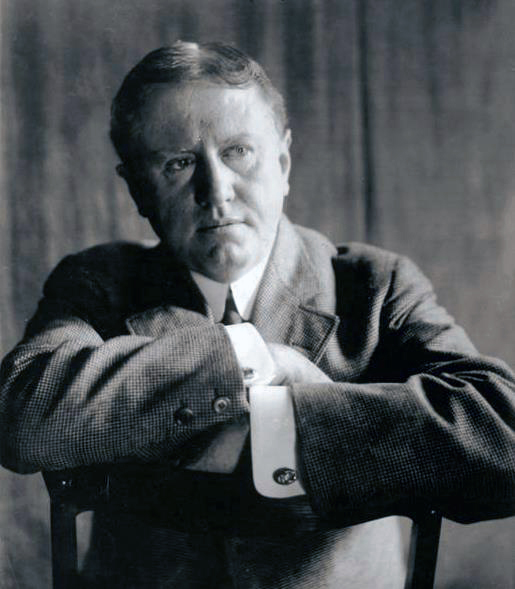

O. Henry - Wikipedia

William Sydney Porter (1862 – 1910), better known by his pen name O. Henry, was an American short story writer. His stories are known for their surprise endings.


Wednesday, August 12, 2020

THE HISTORY OF THE SECOND OLD MAN AND THE TWO BLACK DOGS - from THE ARABIAN NIGHTS - translated by Edward Forster, M.A.


1907 Scarce Edition - The Arabian Nights by W.H.D. Rouse Illustrated b – MFLIBRA - Antique Books


Great Prince of the Genii, you must know, that these two black dogs, which you see here, and myself, are three brothers. Our father left us, when he died, one thousand sequins each. With this sum we all embarked in the same profession; namely, as merchants. Soon after we had opened our warehouse, my eldest brother, who is now one of these dogs, resolved to travel, and carry on his business in foreign countries. With this view he sold all his goods, and bought such other sorts of merchandize as were adapted to the different countries he proposed visiting.

He set out, and was absent a whole year. At the end of this time, a poor man who seemed to me to be asking charity, presented himself at my warehouse, “God help you,” said I. - “And you also,” answered he: “is it possible you do not know me?” - On looking attentively at him, I recognized his person, “Ah, my brother,” I cried, embracing him, “how should I possibly know you in this state?” I made him come in directly, and enquired both after his health and the success of his voyage. - “Do not ask me,” he replied; “in beholding me you see the whole. To enter into a detail of all the misfortunes that I have suffered in the last year, and which have reduced me to the state you see, would only be to renew my affliction.”

I instantly shut up my shop, and neglecting everything else, I took him to the bath, and dressed him in the best apparel my wardrobe afforded. I examined the state of my business, and finding, by my accounts, that I had just doubled my capital, that is, that I was now worth two thousand sequins, I presented him with the half. “Let this, my brother,” I said, “make you forget your losses.” He joyfully accepted the thousand sequins; again settled his affairs; and we lived together as before.

Some time after this, my second brother, which is the other of these black dogs, wished also to dispose of his property. Both his elder brother and myself tried every thing in our power to dissuade him from it, but in vain. He sold all, and with the money he bought such merchandize as he wished for his journey. He took his departure, and joined a caravan. At the end of a year he also returned in the same condition as his brother did. I furnished him with clothes; and as I had gained another thousand sequins, I gave them to him. He directly bought a shop, and continued to exercise his business.

One day both my brothers came to me, and proposed that I should make a voyage with them, for the purpose of traffic. “You have travelled,” said I, rejecting at first their scheme, “and what have you gained? Who will insure, that I shall be more fortunate than you?” In vain did they use every argument they thought could induce me to try my fortune. I still refused to consent to their design. They returned, however, so often to the subject, that, after having withstood their solicitations for five years, I at length yielded.

When it became necessary to prepare for the voyage, and we were consulting on the sort of merchandize to be bought, I discovered that they had consumed their capital and that nothing remained of the thousand sequins I had given to each. I did not, however, reproach them: on the contrary, as my capital was increased to six thousand sequins, I divided the half with them, and said, “We must, my brothers, risk only three thousand sequins, and endeavour to conceal the other in some secure place; that if our voyage be not more successful than those you have already made, we shall, with this sum, be able to console ourselves and begin our former profession. I will give one thousand sequins to each, and keep one myself; and I will conceal the other three thousand in a corner of my house.” We purchased our goods; embarked in a vessel, which we ourselves freighted; and set sail with a favourable wind. After sailing about a month, we arrived, without any accident, at a port, where we landed, and had a most advantageous sale for our merchandize. I, in particular, sold mine so well, that I gained ten for one. We then purchased the produce of that country, in order to traffic with it in our own.

About the time that we were ready to embark on our return, I accidentally met on the sea-shore a female, of a very fine figure, but poorly dressed. She accosted me by kissing my hand, and entreated me most earnestly to permit her to go with me, and take her for my wife. I started many difficulties to such a plan; but at length she said so much to persuade me that I ought not to regard her poverty, and that I should be well satisfied with her conduct, I was quite overcome. I directly procured proper dresses for her, and after marrying her in due form, she embarked with me, and we set sail.

During our voyage, I found my wife possessed of so many good qualities, that I loved her every day more and more. In the meantime my two brothers, who had not traded so advantageously as myself, and who were jealous of my prosperity, began to feel exceedingly envious. They even went so far as to conspire against my life; for one night, while my wife and I were asleep, they threw us into the sea.

My wife proved to be a fairy, consequently possessed of supernatural power; you may therefore imagine she was not hurt. As for myself, I should certainly have perished without her aid. I had hardly, however, fallen into the water before she took me up, and transported me into an island. As soon as it was day the fairy thus addressed me: “You may observe, my husband, that in saving your life, I have not ill rewarded the good you have done me. You must know, that I am a fairy, and being upon the shore when you were about to sail, I felt a great inclination for you. I wished to try the goodness of your heart, and for this purpose I presented myself before you in the disguise you saw. You acted most generously; and I am therefore delighted in finding an occasion of shewing my gratitude: but I am enraged against your brothers, nor shall I be satisfied till I have taken their lives.”

I listened with astonishment to the discourse of the fairy, and thanked her, as well as I was able, for the great obligation she had conferred on me: “But madam,” said I to her, “I must entreat you to pardon my brothers; for although I have the greatest reason to complain of their conduct, yet I am not so cruel as to wish their ruin.” I related to her what I had done for each of them, and my account only increased her anger. “I must instantly fly after these ungrateful wretches,” cried she, “and bring them to a just punishment; I will sink their vessel, and precipitate them to the bottom of the sea.” - “No, beautiful lady,” replied I, “for Heaven’s sake moderate your indignation, and do not execute so dreadful an intention; remember they are still my brothers, and that we are bound to return good for evil.”

I appeased the fairy by these words; and no sooner had I pronounced them, than she transported me in an instant from the island where we were, to the top of my own house, which was terraced, and then disappeared. I descended, opened the doors, and dug up the three thousand sequins which I had hidden. I afterwards repaired to my shop, opened it, and received the congratulations of the merchants in the neighbourhood on my arrival. When I returned home I perceived these two black dogs, which came towards me with a submissive air. I could not imagine what this meant, but the fairy, who soon appeared, satisfied my curiosity. “My dear husband,” said she, “be not surprised at seeing these two dogs in your house; they are your brothers.” My blood ran cold on hearing this, and I enquired by what power they had been transformed into that state. “It is I,” replied the fairy, “who have done it; at least it is one of my sisters, to whom I gave the commission, and she has also sunk their ship; you will lose the merchandize it contained, but I shall recompense you in some other way; as to your brothers, I have condemned them to remain under this form for ten years, as a punishment for their perfidy.” Then informing me where I might hear of her, she disappeared.

The ten years are now completed, and I am travelling in search of her. As I was passing this way I met this merchant, and the good old man, who is leading his hind, and here I staid. This, O Prince of the Genii, is my history; does it not appear to you of a most extraordinary nature?” - “Yes,” replied the Genius. “I confess it is wonderful, and therefore I remit the second third of the merchant’s punishment.”


زیباترین تصاویر مینیاتوری ایرانی


THE HISTORY OF THE FIRST OLD MAN AND THE HIND - from THE ARABIAN NIGHTS - translated by Edward Forster, M.A.


https://www.sacred-texts.com/neu/lang1k1/img/01500.jpg


I am now going, said he, to begin my tale, and I request your attention. The hind, whom you see here, is my cousin; nay, more, she is my wife. When I married her, she was only twelve years old; and she ought therefore not only to look upon me as her relation and husband, but even as her father.

We lived together thirty years, without having any children; this, however, was no draw back upon my kindness and regard. Still my desire of offspring was so great, that for this purpose, and for this only, I purchased a female slave, who bore me a son of great promise and expectation. Soon after, my wife became infected with jealousy, and consequently took a great aversion to both mother and child; yet she so well concealed her sentiments, that I became acquainted with them, alas, too late.

In the mean time my son grew up; and he was about ten years old, when I was obliged to make a journey. I recommended both the slave and the child to my wife, before my departure, as I had no distrust of her, and prayed her to take great care of them during my absence, which would not be less than a year. During this time she endeavoured to satiate her hatred. She applied herself to the study of magic; and when she was sufficiently skilled in that diabolical art to execute the horrible design she meditated, the wretch carried my son to a distant place. When there, by her enchantments, she changed him into a calf, gave him to my steward, and ordered him to bring him up as a calf, which she said she had bought. She was not, however, satisfied with this infamous action, but metamorphosed the slave into a cow, which she also sent to my steward.

Immediately on my return I inquired after my child and his mother. “Your slave is dead,” said she, “and it is now more than two months since I have beheld your son; nor do I know what is become of him.” I was sensibly affected at the death of the slave; but as my son only disappeared, I flattered myself that he would soon be found. Eight months however passed, and he did not return; nor could I learn any tidings of him. In order to celebrate the festival of the great Bairam, which was approaching, I ordered my steward to bring me the fattest cow I had for a sacrifice. He obeyed my commands; and the cow he brought me was my own slave, the unfortunate mother of my son. Having bound her, I was about to make the sacrifice, when at the very instant she lowed most sorrowfully, and the tears even fell from her eyes. This seemed to me so extraordinary, that I could not but feel compassion for her, and was unable to give the fatal blow. I therefore ordered her to be taken away, and another brought.

My wife, who was present, seemed angry at my compassion, and opposed an order which defeated her malice. “What are you about, my husband?” said she, “why not sacrifice this cow? Your steward has not a more beautiful one, nor one more proper for the purpose.” Wishing to oblige my wife, I again approached the cow; and struggling with my pity, which suspended the sacrifice, I was again going to give the mortal blow, when the victim a second time disarmed me by her redoubled tears and moanings. I then delivered the instruments into the hands of my steward. “Take them,” I cried, “and make the sacrifice yourself, the lamentations and tears of the animal have overcome me.”

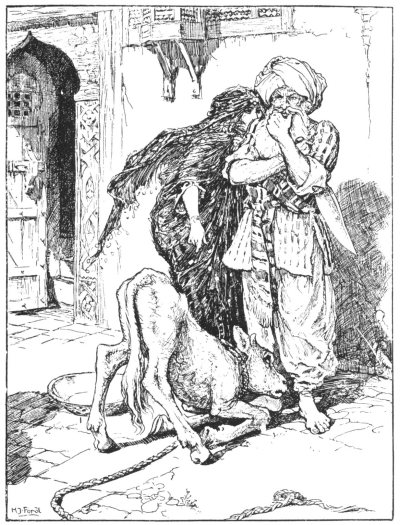
The steward was less compassionate, and sacrificed her. On taking off the skin we found hardly any thing but bones, though she appeared very fat. “Take her away,” said I to the steward, truly chagrined, “I give her to you to do as you please with; regale both yourself and whomsoever you wish; and if you have a very fat calf, bring it in her place. I did not inquire what he did with the cow, but he had not been gone long, before I saw a remarkable fine calf brought. Although I was ignorant that this calf was my own son, yet I felt a sensation of pity arise in my breast at first sight. As soon also as he perceived me, he made so great an effort to come to me, that he broke his cord. He lay down at my feet, with his head on the ground, as if he endeavoured to excite my compassion, and not have the cruelty to take away his life: striving, in this manner, to make me comprehend that he was my son.

I was still more surprised and affected by this action, than I had been by the tears of the cow. I felt a kind of tender pity, which interested me much for him; or, to speak more correctly, my blood guided me to what was my duty. “Go back.” I cried, “and take all possible care of this calf, and, in its room, bring another directly.”

No sooner did my wife hear this than she exclaimed, “What are you about, my husband? do not, I pray, sacrifice any other than this.” - “Wife,” answered I, “I will not sacrifice him; I wish to favour him, do not you therefore oppose it.” - This wicked woman, however, did not agree to my proposal; she hated my son too much to suffer him to remain in safety; and she continued to demand his sacrifice so obstinately, that I was compelled to yield. I bound the calf, and, taking the fatal knife, was going to bury it in the throat of my son, when he turned his eyes, filled with tears, so persuasively upon me, that I had no power to execute my intention. The knife fell from my hand, and I told my wife I was determined to have another calf. She tried every means to induce me to alter my mind; I continued firm, however, in my resolution, in spite of all she could say; promising, for the sake of appeasing her, to sacrifice this calf at the feast of Bairam on the following year.

The next morning my steward desired to speak with me in private. “I am come,” said he, “to give you some information, which, I trust, will afford you pleasure. I have a daughter, who has some little knowledge of magic; and as I was bringing the calf back yesterday which you were unwilling to sacrifice, I observed, that she smiled at seeing it, and the next moment began to weep. I enquired of her the cause of these two contrary emotions. ‘My dear father,’ she answered, ‘that calf, which you bring back, is the son of our master; I smiled with joy at seeing him still alive, and wept at the recollection of his mother, who was yesterday sacrificed in the shape of a cow. These two metamorphoses have been contrived by the enchantments of our master’s wife, who hated both the mother and the child.’ - This,” continued the steward, “is what my daughter said, and I come to report it to you.” Imagine, O Genius, my surprise at hearing these words: I immediately set out with my steward, to speak to his daughter myself. On my arrival I went first to the stable, where my son had been placed; he could not return my caresses; but he received them in a way, which convinced me that he was really my son.

When the daughter of the steward made her appearance, I asked her if she could restore him to his former shape. “Yes,” replied she, “I can.” - “Ah,” exclaimed I, “if you can perform such a miracle, I will make you the mistress of all I possess.” - She then answered with a smile, “You are our master, and I know how much we are bound to you; but I must mention, that I can restore your son to his own form, only on two conditions; first, that you bestow him upon me for my husband; and secondly, that I may be permitted to punish her who changed him into a calf.” - “To the first,” I replied, “I agree with all my heart; I will do still more, I will give you, for your own separate use, a considerable sum of money, independant of what I destine for my son. In short, you shall perceive how I can acknowledge the important service you do me. I agree also to that which regards my wife; a person, who has been capable of so criminal an action, is worthy of punishment. I abandon her to you, do what you please with her; I only entreat you to spare her life.” - “I will treat her then,” she said, “in the same manner as she has treated your son.” - To this I gave my consent, provided she first restored my son to me.


https://i.pinimg.com/originals/00/f2/7c/00f27c6f8eb6cd995df8e59f119525e6.jpg


The damsel then took a vessel full of water, and pronouncing over it some words I did not understand, she thus addressed herself to the calf: “O calf, if thou hast been created by the all powerful Sovereign of the world, as thou now appearest, retain that form; but if thou art a man, and hast been changed by enchantment into a calf, reassume, by permission of thy divine Creator, thy natural figure!” - In saying this she threw the water over him, and he instantly regained his own form.

“My child! my dear child,” I immediately exclaimed, and embraced him with a transport I could not restrain; “it is the Almighty, who hath sent this damsel to us, to destroy the horrible charm with which you were surrounded, and to avenge the evil that has been done to you and your mother. I am sure gratitude will induce you to accept her for a wife, as I have already promised for you.” - He joyfully consented; but before they were united the damsel changed my wife into this hind, which you see here. I wished her to have this form in preference to any other more unpleasant, that we might see her, without repugnance, in our family.

Since this, my son is become a widower, and is now travelling. Many years have passed since I have heard any thing of him; I have therefore now set out with a view to gain some information; and as I did not like to trust my wife to the care of any one during my search, I thought proper to carry her along with me. This is the history of myself and this hind; can any thing be more wonderful?” - “I agree with you,” said the Genius, “and in consequence I grant a third of my pardon to this merchant.”

“As soon as the first old man, Sire, had finished his history,” continued the sultana, “the second, who led the two black dogs, said to the Genius, “I will relate to you what has happened to me and these two dogs which you see, and I am sure you will find my history still more astonishing than that which you have heard. But when I have told it, will you grant to this merchant another third of his pardon? - “Yes,” answered the Genius, “provided your history surpasses that of the hind.” This being settled, the second old man began.”


https://blogger.googleusercontent.com/img/b/R29vZ2xl/AVvXsEiW54DeesMG_iIpI96d8pylqPK5HJLRniXN4H-zNcPw91co5w8g3XAPp1tmO15ZZaCafwLqUEsY_7gc3-5VCYmBLx9A4g7EpSISC1shvH6_nq4_lKI_6GVdofO0BO0_ZUgFWG__Ei1GbesJ/s1600/1014194_611141578916963_1270376313_n.jpg


Tuesday, August 11, 2020

CLAUDE MELLAN - ( 1598 – 1688) French engraver.


Incredible! This 17th century engraving depicting Jesus Christ wearing a crown of thorns is called "Sudarium of Saint Veronica", engraving by Claude Mellan in 1649. An ordinary drawing, close up, turns out to be an image created using a single line that is twisted in a spiral. All the details of the face and transitions of light and shadow are created using thickenings of this line. For the artist's contemporaries, his method of engraving remained a mystery, and no one was able to repeat it.


https://upload.wikimedia.org/wikipedia/commons/7/7b/Claude_Mellan_Self_Portrait.jpg

Self-portrait, engraving by Claude Mellan (1635)


Claude Mellan ( 1598 – 1688) was a French draughtsman, engraver, and painter.

Mellan was born in Abbeville, the son of a customs official.

His first known print (Préaud no. 288 ), made for a thesis in theology at the Collège des Mathurins, shows that he was in Paris by 1619. His first teachers have not been identified, but his early engravings are thought to show the influence of Léonard Gaultier.

In 1624 Mellan went to Rome, where he studied engraving for a brief time with Francesco Villamena, who died that year. He then studied under Simon Vouet, who had been in Rome since 1614. Vouet encouraged Mellan to draw, considering it essential for both engraving and painting. Mellan engraved some of Vouet's works and also began drawing small portraits from life. Many of his portrait drawings were never engraved. He developed a style that was simple and natural, that would be characteristic throughout his later career. Many of his engravings in Rome were reproductive works, including, for example, designs by Pietro da Cortona and Gianlorenzo Bernini. The few after his own designs include Saint Francis de Paul  and the Penitent Magdalene . The plates Mellan engraved in Rome were mostly executed in a conventional manner.

In 1637, after a period of time in Aix-en-Provence with Nicolas-Claude Fabri de Peiresc, he returned to Paris, where he adopted an idiosyncratic technique, in which, instead of creating shade by cross-hatching, he used a system of parallel lines, regulating tone by varying their breadth and closeness.

Particularly notable is his engraving The Face of Christ , also called the Sudarium of Saint Veronica (see Veil of Veronica), created from a single spiralling line that starts at the tip of Jesus's nose. (as I said few lines above).

During this later period in Paris, Mellan mostly engraved his own work. He was much sought after as a portrait artist, drawing from life and engraving the portraits. Among his subjects were members of the royal family of Bourbon. His drawings "reveal more variety of style and execution than he showed in the engravings." Two examples, for which both a drawing  and an engraving exist, are portraits of Marie-Louise de Gonzague-Nevers and Henri de Savoie, Duc de Nemours.

He also created large religious works with geometric layouts and poses. According to Barbara Brejon de Lavergnée, writing in The Dictionary of Art, Mellan's use of the single line gives "an abstract effect" and, "as an engraver he proved sensitive to the classical ideal developed by Nicolas Poussin, Jacques Stella and others in Paris in the middle of the 17th century." Among Mellan's reproductive engravings are two frontispieces for religious works after designs by Poussin  and Stella .

Anatole de Montaiglon catalogued 400 engravings by Mellan, and about 100 drawings are known. The latter are mostly in the Stockholm Nationalmuseum (via the collection of Carl Gustav Tessin) and the Hermitage, Saint Petersburg (via the Cobenzl collection). Several of Mellan's lost paintings are known from his engravings of them, including Samson and Delilah  and Saint John the Baptist in the Desert.  A few other paintings were attributed to him, beginning in the 1970s, but these have not been generally accepted.


https://smhttp-ssl-53905.nexcesscdn.net/catalogue_images/auction//large/13530-4_1.jpg


https://i.pinimg.com/564x/5d/06/86/5d0686a5f308df98197803fac1cf17b6.jpg


https://upload.wikimedia.org/wikipedia/commons/8/80/Saint_Mary_Magdalen._Engraving_by_C._Mellan_after_himself._Wellcome_V0032701.jpg


https://collectionapi.metmuseum.org/api/collection/v1/iiif/392631/772411/main-image


https://collectionapi.metmuseum.org/api/collection/v1/iiif/351273/773223/main-image


https://upload.wikimedia.org/wikipedia/commons/thumb/e/e8/Nicolas_Claude_Fabri_de_Peiresc._Line_engraving_by_C._Mellan_Wellcome_V0004575.jpg/1200px-Nicolas_Claude_Fabri_de_Peiresc._Line_engraving_by_C._Mellan_Wellcome_V0004575.jpg


https://iiif.wellcomecollection.org/image/V0032342.jpg/full/full/0/default.jpg


https://media.gettyimages.com/photos/claude-mellan-raffaello-menicucci-engraving-on-laid-paper-picture-id1157337363


https://collectionapi.metmuseum.org/api/collection/v1/iiif/392365/772429/main-image


https://blogger.googleusercontent.com/img/b/R29vZ2xl/AVvXsEiObqvZnwEBXqs83a0EOIREhI4qzcPsWqNSSxsHJYdSaiGBeNN93b67krQNVHLaVLkX7ZPOiM46yu5quU6MJtmFXqMM_jOAaQqngtElm6qFJH-U14E-t7bAoXgLlnEKpSBZN4D7rSgvksZt/w1200-h630-p-k-no-nu/Mellan+Moon+Maps.jpg

Moon


https://collectionapi.metmuseum.org/api/collection/v1/iiif/391753/772396/main-image


https://upload.wikimedia.org/wikipedia/commons/d/de/Claude_Mellan--engraving_of_Judith_and_the_Head_of_Holofernes_by_Virginia_da_Vezzo.jpg


https://media.mutualart.com/Images/2009_03/12/0017/86088/86088_2cfa3c84-48c2-4bbd-9b3b-a0c9e132c746_-1_570.Jpeg


https://render.fineartamerica.com/images/images-profile-flow/400/images/artworkimages/mediumlarge/3/saint-francis-adoring-the-christ-child-claude-mellan.jpg


https://d32dm0rphc51dk.cloudfront.net/6XwzDZO7JCsDpNc9vSJszw/large.jpg


Saturday, August 8, 2020

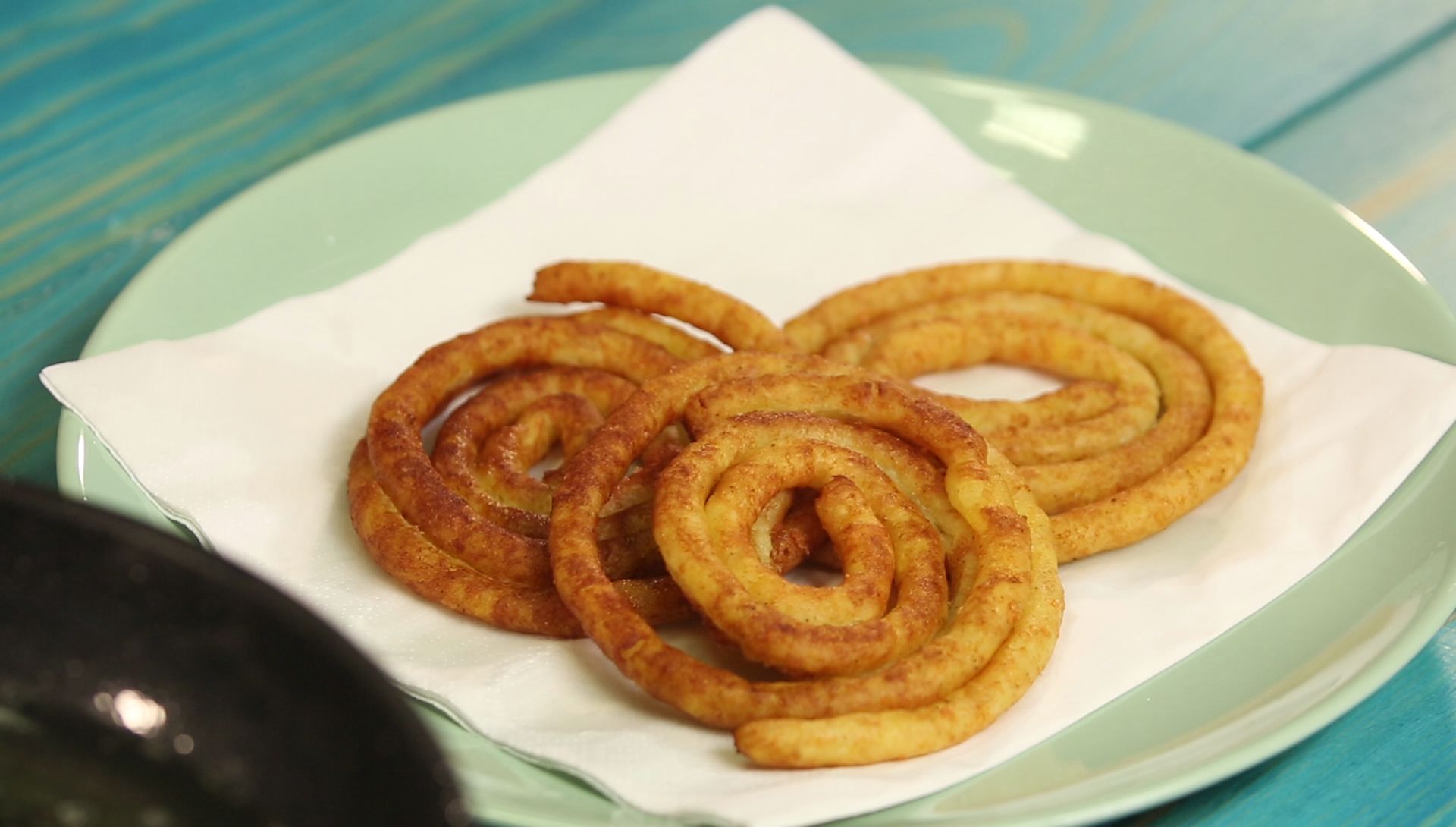
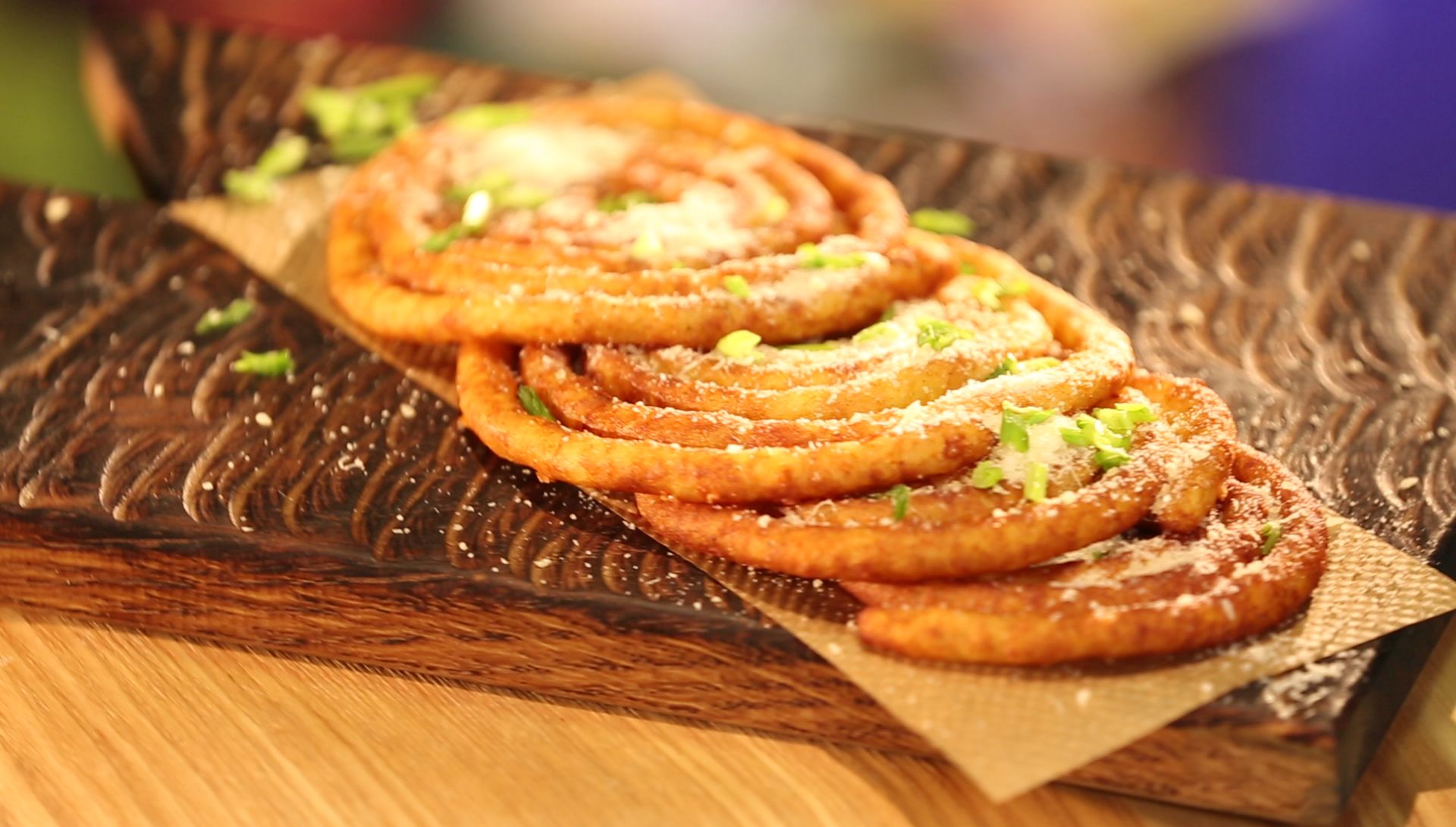
CRISPY POTATO SPIRALS


image25_copy (700x397, 52Kb)


Crispy on the outside and very tender on the inside, the spirals can be a great snack for a fun company.

INGREDIENTS :

Boiled potatoes - 350 g
Egg - 1 pc.
Milk - 50 ml
Hard cheese - 20 g
Vegetable oil - 500 ml
Potato starch - 10 g
Salt
Pepper


PREPARATION :

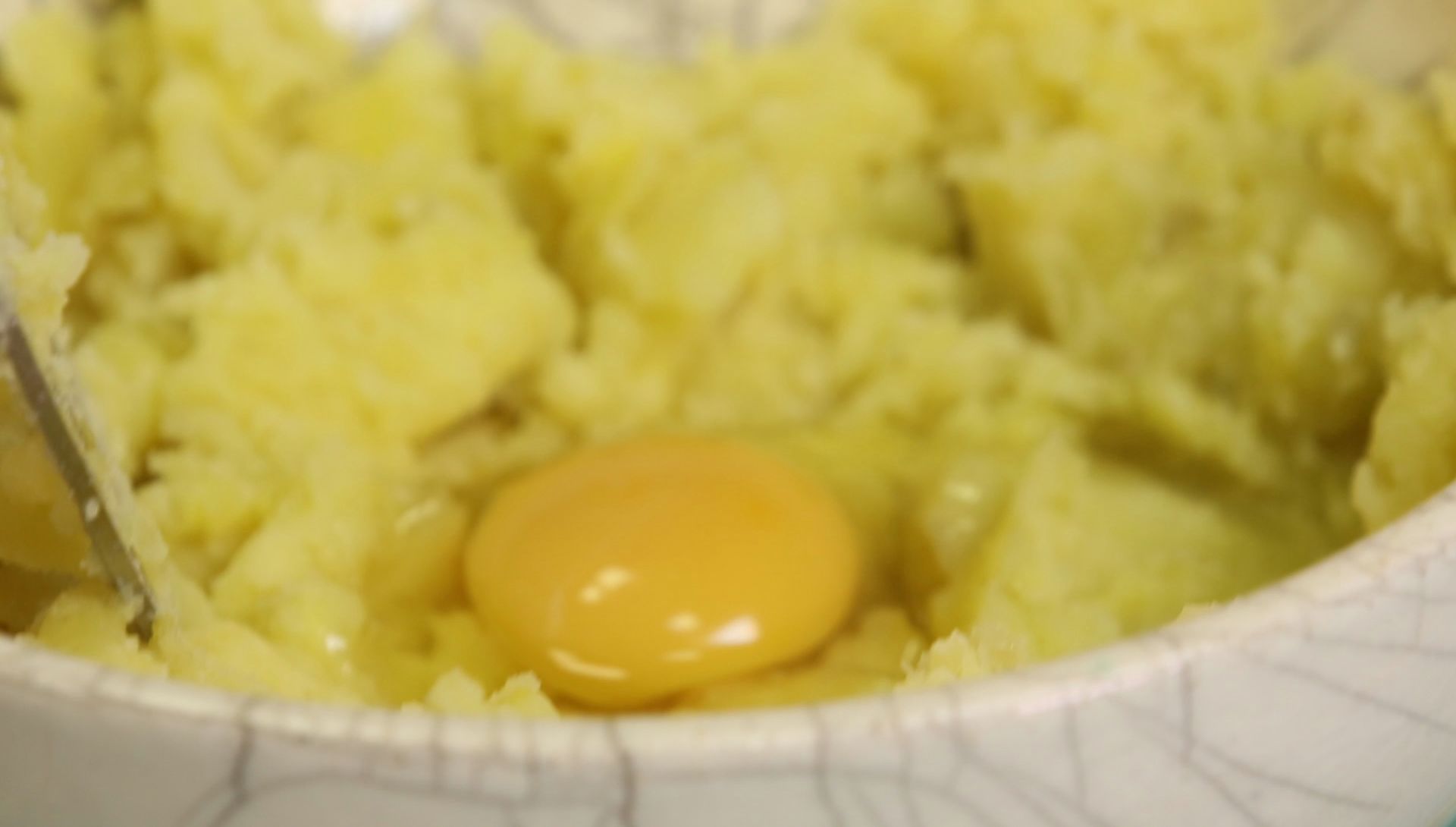
Mash the potatoes. Add egg, milk, cheese, starch, salt and pepper.


Mix everything and transfer to a pastry bag. Pour oil into a frying pan and heat to 180 degrees. Gently squeeze the puree in a spiral shape into a hot deep fat.


Fry for 10-15 seconds on each side until golden brown. Transfer the hot spirals to a paper towel in a plate


The finished dish can be sprinkled with cheese and garnished with green onions.


Enjoy your meal


HOW I'D LOVE TO - by Anne Smit


 HOW  I'D  LOVE  TO

by Anne Smit


How I'd like to
catch your nightmares
with my bare hands
and put them away
out of your reach.


How I'd love to
take away your insecurities
and replace them
with the wonderful thoughts
I have about you.


How I desire to
rip out your frustrations
and make you smile endlessly
maybe then you will see
how beautiful you are.


Thursday, August 6, 2020

I WILL ALWAYS LOVE YOU - by Mark Spencer


I  WILL  ALWAYS  LOVE  YOU

by Mark Spencer


I woke up one morning,
When I heard my baby cry.
Looking in the mirror,
She found a wrinkle by her eye.


She said, "Will you still love me
When my beauty slips away?"
And as I took her in my arms,
This was what I had to say.


I will always love you.
That will never end.
When we're old and gray,
You’ll still be my best friend.


With you I'd share each moment,
For the rest of my life.
I will be your husband,
If you will be my wife.


She gave me a daughter,
The apple of my eye.
We raised her together,
As the years flew quickly by.


And on our girl's wedding day,
My baby cried a tear.
When I put my arm around her
And whispered in her ear.


I will always love you.
That will never end.
When we're old and gray,
You’ll still be my best friend.


I wouldn't trade these moments
For any other life.
That's why I'm your husband,
That’s why you're my wife.


As time overtook us,
My life began to fade.
And last night, at my bedside,
She asked me why I stayed.


I took her by the hand,
And held it for a while.
Then breathing my last breath
I told her with a smile.


I will always love you.
That will never end.
Now we're old and gray
And you're still my best friend.


With you, I've shared each moment,
The best years of my life.
I'm glad I was your husband,
I'm proud you were my wife.