Showing posts with label INDIAN CULTURE. Show all posts

Wednesday, February 24, 2021

WOMAN OR WITCH ? - by Survi Sharma


WOMAN  OR  WITCH ?

by  Survi Sharma


 have you ever wondered
what would be your condition
when you are proclaimed a witch
so terrible the experience may be
but dear reader, if you want to know
just travel to some villages of Bihar and Rajasthan,
women are treated as if they were a witch
they are beaten endlessly, sometimes being killed,
and people take pride doing this
are we living under better infrastructure,
no my friend, it is a slur on the face of our country,
we have to clean it with the passage of time.


Wednesday, February 3, 2021

LOVE IS FIRE - by Jaya Nagrani, India


LOVE IS FIRE

by Jaya Nagrani,  India


Love is fire,
As it takes us higher,
It changes us completely,
But very sweetly,
Seprations are painful,
But experiences are wonderfull,

Do fall in love once in life,
You will learn,that;
To live is to give.

Love is fire,
As it takes us higher.


Tuesday, December 1, 2020

ANCIENT INDIA - by Thomas H. Prescott - from "The American Encyclopedia of History, Biography and Travel Comprising Ancient and Modern History"


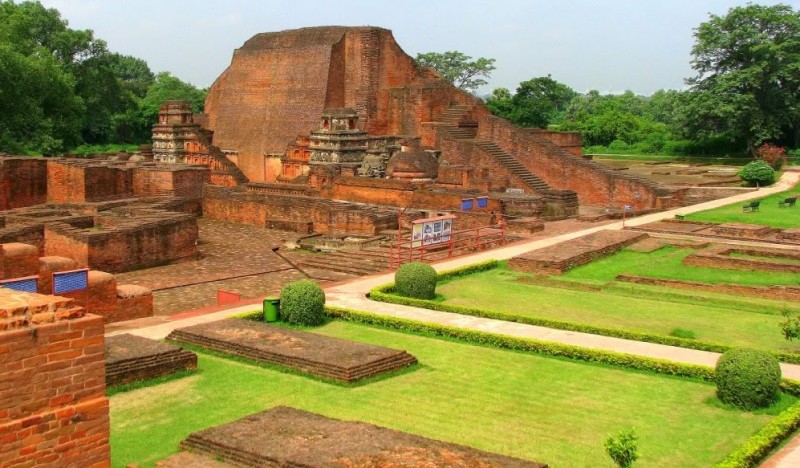
http://www.mysteryofindia.com/wp-content/uploads/2014/09/Nalanda-University-800x468.jpg

Ruins of Nalanda University


One of the great branches, we have said, of the Caucasian family of mankind was the Indo-Persian, which, spreading out in the primeval times from the original seat of the Caucasian part of the human species, extended itself from the Caspian to the Bay of Bengal, where, coming into contact with the southern Mongolians, it gave rise, according to the most probable accounts, to those new mixed Caucasian-Mongolian races, the Malays of the Eastern Peninsula; and, by a still farther degeneracy, to the Papuas, or natives of the South Sea Islands. While thus shading off into the Mongolism of the Pacific, the Indo-Persian mass of our species was at the same time attaining maturity within itself; and as the first ripened fragment of the Mongolians had been the Chinese nation, so one of the first ripened fragments of the Indo-Persian branch of the Caucasians seems to have been the Indians. At what time the vast peninsula of Hindoostan could first boast a civilized population, it is impossible to say; all testimony, however, agrees in assigning to Indian civilization a most remote antiquity. Another fact seems also to be tolerably well authenticated regarding ancient India; namely, that the northern portions of it, and especially the north-western portions, which would be nearest the original Caucasian seat, were the first civilized; and that the civilizing influence spread thence southwards to Cape Comorin.

Notwithstanding this general conviction, that India was one of the first portions of the earth’s surface that contained a civilized population, few facts in the ancient history of India are certainly known. We are told, indeed (to omit the myths of the Indian Bacchus and Hercules), of two great kingdom those of Ayodha (Oude) and Prathisthana (Vitera ​as having existed in northern India upwards of a thousand years before Christ; of conquests in southern India, effected by the monarchs of these kingdoms; and of wars carried on between these monarchs and their western neighbors the Persians, after the latter had begun to be powerful. All these accounts, however, merely resolve themselves into the general information, that India, many centuries before Christ, was an important member in the family of Asiatic nations; supplying articles to their commerce, and involved in their agitations. Accordingly, if we wish to form an idea of the condition of India prior to that great epoch in its history - ​its invasion by Alexander the Great, b. c. 326 we can only do so by reasoning back from that we know of its present condition, allowing for the modifying effects of the two thousand years which have intervened; and especially for the effects produced by the Mohammedan invasion, a. d. 1000. This, however, is the less difficult in the case of such a country as India, where the permanence of native institutions is so remarkable, and though we cannot hope to acquire a distinct notion of the territorial divisions, etc., of India in very ancient times, yet, by a study of the Hindoos as they are at present, we may furnish ourselves with a tolerably accurate idea of the nature of that ancient civilization which overspread Hindoostan many centuries before the birth of Christ, and this all the more probably that the notices which remain of the state of India at the time of the invasion of Alexander, correspond in many points with what is to be seen in India at the present day.

The population of Hindoostan, the area of which is estimated at about a million square miles, amounts to about 120,000,000; of whom about 100,000,000 are Hindoos or aborigines, the remainder being foreigners, either Asiatic or European. The most remarkable feature in Hindoo society is its division into castes. The Hindoos are divided into four great castes - the Brahmins, whose proper business is religion and philosophy; the Kshatriyas, who attend to war and government; the Vaisyas, whose duties are connected with commerce and agriculture; and the Sudras, or artisans and laborers. Of these four castes the Brahmins are the highest; but a broad line of distinction is drawn between the Sudras and the other three castes. The Brahmins may intermarry with the three inferior castes - ​the kshatriyas with the vaisyas and the Sudras; and the vaisyas with the Sudras; but no Sudra can choose a wife from either of the three superior castes. As a general rule, every person is required to follow the profession of the caste to which he belongs: thus the Brahmin is to lead a life of contemplation and study, subsisting on the contributions of the rich; the Kshatriya is to occupy himself in civil matters, or to pursue the profession of a soldier; and the Vaisya is to be a merchant or a farmer. In fact, however, the barriers of caste have in innumerable instances been broken down. The ramifications, too, of the caste system are infinite. Besides the four pure, there are numerous mixed castes, all with their prescribed ranks and occupations.

A class far below even the pure Sudras is the Pariahs or outcasts; consisting of the refuse of all the other castes, and which, in process of time, has grown so large as to include, it is said, one-fifth of the population of Hindoostan. The Pariahs perform the meanest kinds of manual labor. This system of castes - ​of which the Brahmins themselves, whom some suppose to have been originally a conquering race, are the architects, if not the founders - ​is bound up with the religion of the Hindoos. Indeed of the Hindoos, more truly than of any other people, it may be said that a knowledge of their religious system is a knowledge of the people themselves.

The Vedas, or ancient sacred books of the Hindoos, distinctly set forth the doctrine of the infinite and Eternal Supreme Being. According to the Vedas, there is ‘one unknown, true Being, all present, all powerful, the creator, preserver, and destroyer of the universe.’ This Supreme Being ‘is not comprehensible by vision, or by any other of the organs of sense, nor can he be conceived by means of devotion or virtuous practices.’ He is not space, nor air, nor light, nor atoms, nor soul, nor nature: he is above all these and the cause of them all. He ‘has no feet, but extends everywhere; has no hands, but holds everything; has no eyes, yet sees all that is; has no ears, yet hears all that passes. His existence had no cause. He is the smallest of the small and the greatest of the great; and yet is, in fact neither small nor great.’ Such is the doctrine of the Vedas in its purest and most abstract form; but the prevailing theology which runs through them is what is called Pantheism, or that system which speaks of God as the soul of the universe, or as the universe itself. Accordingly, the whole tone and language of the highest Hindoo philosophy is Pantheistic. As a rope, lying on the ground, and mistaken at first view for a snake, is the cause of the idea or conception of the snake which exists in the mind of the person looking at it, so, say the Vedas, is the Deity the cause of what we call the universe. ‘In him the whole world is absorbed; from him it issues; he is entwined and interwoven with all creation.’ ‘All that exists is God: whatever we smell, or taste, or see, or hear, or feel, is the Supreme Being.’

This one incomprehensible Being, whom the Hindoos designate by the mystical names Om, Tut, and Jut, and sometimes also by the word Brahm, is declared by the Vedas to be the only proper object of worship. Only a very few persons of extraordinary gifts and virtues, however, are able, it is said, to adore the Supreme Being - the great Om - directly. The great majority of mankind are neither so wise nor so holy as to be able to approach the Divine Being himself, and worship him. It being alleged that persons thus unfortunately disqualified for adoring the invisible Deity should employ their minds upon some visible thing, rather than to suffer them to remain idle, the Vedas direct them to worship a number of inferior deities, representing particular acts or qualities of the Supreme Being; as, for instances, Crishnu or Vishnu, the god of preservation; Muhadev, the god of destruction; or the sun, or the air, or the sea, or the human understanding; or, in fact any object or thing which they may choose to represent as God. Seeing, say the Hindoos, that God pervades and animates the whole universe, everything, living or dead, may be considered a portion of God, and as such, it may be selected as an object of worship, provided always it be worshiped only as constituting a portion of the Divine Substance. In this way, whatever the eye looks on, or the mind can conceive, whether it be the sun in the heavens or the great river Ganges, or the crocodile on its banks, or the cow, or the fire kindled to cook food, or the Vedas, or a Brahmin, or a tree, or a serpent - all may be legitimately worshiped as a fragment, so to speak, of the Divine Spirit. Thus there may be many millions of gods to which Hindoos think themselves entitled to pay divine honours. The number of Hindoo gods is calculated at 330,000,000, or about three times the number of their worshipers.

Of these, the three principal deities of the Hindoos are Brahma the creator, Vishnu the preserver, and Seeb or Siva the destroyer. These three of course, were originally intended to represent the three great attributes of the Om or Invisible Supreme Being ​namely, his creating, his preserving, and his destroying attributes. Indeed the name Om itself is a compound word, expressing the three ideas of creation, preservation, and destruction, all combined. The three together are called Trimurti, and there are certain occasions when the three are worshiped conjointly. There are also sculptured representations of the Trimurti, in which the busts of Brahma, Vishnu, and Siva are cut out of the same mass of stone. One of these images of the Trimurti is found in the celebrated cavern temple of Elephanta, in the neighborhood of Bombay, perhaps the most wonderful remnant of ancient Indian architecture. Vishnu and Siva are more worshipped separately than Brahma each having his body of devotees specially attached to him in particular.

Hindooism, like other Pantheistic systems, teaches the doctrine of the transmigration of souls: all creation, animate and inanimate, being, according to the Hindoo system, nothing else but the deity Brahm himself parceled out, as it were, into innumerable portions and forms (when these are reunited, the world will be at an end), just as a quantity of quicksilver may be broken up into innumerable little balls or globules, which all have a tendency to go together again. At long intervals of time, each extending over some thousand millions of years, Brahm does bring the world to an end, by reäbsorbing it into his spirit. When, therefore, a man dies, his soul, according to the Hindoos, must either be absorbed immediately into the soul of Brahm, or it must pass through a series of transmigrations, waiting for the final absorption, which happens at the end of every universe, or at least until such time as it shall be prepared for being reunited with the Infinite Spirit. The former of the two is, according to the Hindoos, the highest possible reward: to be absorbed into Brahm immediately upon death, and without having to undergo any farther purification, is the lot only of the greatest devotees. To attain this end, or at least to avoid degradation after death, the Hindoos, and especially the Brahmins, who are naturally the most intent upon their spiritual interests, practice a ritual of the most intricate and ascetic description, carrying religious ceremonies and antipathies with them into all the duties of life. So overburdened is the daily life of the Hindoos with superstitious observances with regard to food, sleep, etc., that, but for the speculative doctrines which the more elevated minds among the Brahmins may see recognised in their religion, the whole system of Hindooism might seem a wretched and grotesque polytheism.

A hundred millions of people professing this system, divided into castes as now, and carrying the Brahminical ritual into all the occupations of lazy life under the hot sun, and amid the exuberant vegetation of Hindoostan, such was the people into which Alexander the Great carried his conquering arms; such, doubtless, they had been for ages before that period; and such did they remain, shut out from the view of the rest of the civilized world, and only communicating with it by means of spices, ivory, etc., which found their way through Arabia or the Red Sea to the Mediterranean, till Vasco de Gama rounded the Cape of Good Hope, and brought Europe and India into closer connection. Meanwhile a Mohammedan invasion had taken place (a. d. 1000); Mohammedans from Persia had mingled themselves with the Hindoos; and it was with this mixed population that British enterprise eventually came into collision.

Ere quitting the Indians, it is well to glance back at the Chinese, so as to see wherein these two primeval and contemporaneous consolidations of our species - the Mongolian consolidation of eastern Asia, and the Caucasian consolidation of the central peninsula of southern Asia - ​differ. ‘Whoever would perceive the full physical and moral difference,’ says Klaproth, ‘between the Chinese and Indian nations, must contrast the peculiar culture of the Chinese with that of the Hindoo, fashioned almost like a European, even to his complexion. He will study the boundless religious system of the Brahmins, and oppose it to the bald belief of the original Chinese, which can hardly be named religion. He will remark the rigorous division of the Hindoos into castes, sects, and denominations, for which the inhabitants of the central kingdom have even no expression. He will compare the dry prosaic spirit of the Chinese with the high poetic souls of the dwellers on the Ganges and the Dsumnah. He will hear the rich and blooming Sanscrit, and contrast it with the unharmonious speech of the Chinese. He will mark, finally, the literature of the latter, full of matters of fact and things worth knowing, as contrasted with the limitless philosophic-ascetic writing of the Indians, who have made even the highest poetry wearisome by perpetual length.’
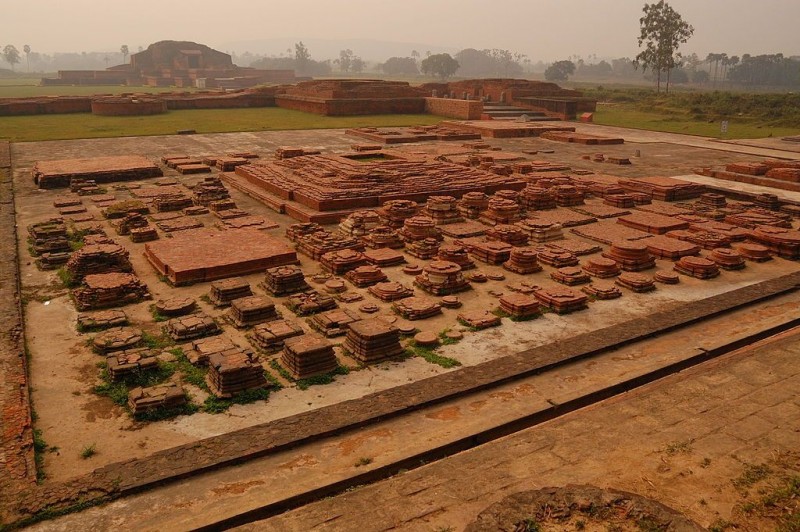

http://www.mysteryofindia.com/wp-content/uploads/2016/03/Vikramshila-University-800x532.jpg

Vikramashila University


Friday, October 30, 2020

SONGS OF RADHA - by Sarojini Naidu


SONGS  OF  RADHA 

by Sarojini Naidu


AT Dawn 


All night my heart its lonely vigil kept
Listening for thee, O Love. All night I wept.
Where went thy wanton footsteps wandering,
Sweet Ghanashyam, my King ?

My bridal veils are flung upon the floor,
My bridal garlands drop across the door.
The buds that on my bed their fragrance spilt,
Grief-scattered, wane and wilt.

O Flute-player, how quickly dost thou tire
Of thine own gladness and thine own desire!
Couldst thou not find upon my sheltering breast
Thy rapture and thy rest ?

Whose are the fingers that like amorous flocks
Raid the ambrosial thickets of thy locks?
Ah, whose the lips that smite with sudden drouth
The garden of thy mouth ?

What shall it profit to revile or hate
Thy fickleness, her beauty or my fate,
Or strive to tear with black and bitter art
Thine image from my heart ?

Without thy loveliness my life is dead,
Love, like a lamp with golden oils unfed.
Come back, come back from thy wild wandering.
Sweet Ghanashyam, my King!


AT Dusk

Krishna Murari, my radiant lover
Cometh O comrades haste.
Bring me rich perfumes my limbs to cover.
Saffron and sandal paste.
Bring shining garments for my adorning,
Blue of the dusk and rose of the morning.
Gold of the flaming noon.
Bring me a breastband of gems that shimmer,
Making the lamps of the stars grow dimmer,
Fillets and fringes of pearls whose glimmer
Shameth the Shravan moon.

Krishna Murari, my radiant lover
Cometh, O sisters spread
Buds and ripe blossoms his couch to cover,
Silver and vermeil red.
With flowering branches the doorways darken,
Is that his flute call? Sisters hearken!
Why tarrieth he so long?
O like a leaf doth my shy heart shiver,
O Like a wave do my faint limbs quiver.
Softly, softly, Jamuna river,
Sing thou our bridal song.


THE QUEST

My foolish love went seeking thee at dawn,
Crying — O wind where is Kanhaya gone?

I questioned at noonrise the forest glade,
Rests my sweet lover in thy friendly shade?

At dusk I pleaded with the dovegray tides,
O tell me where my Flute-player abides?

Dumb were the waters, dumb the woods, the wind,
They knew not where my playfellow to find.

I bowed my weeping face upon my palm,
Moaning — O where art thou, my Ghanashyam?

Then, like a boat that rocks from keel to rafter,
My heart was shaken by thy hidden laughter.

Then didst thou mock me with thy tender malice,
Like nectar bubbling from my own heart's chalice.

Thou saidst, — O faithless one, self-slain with doubt,
Why seekest thou my loveliness without,

And askest wind or wave or flowering dell
The secret that within thyself doth dwell?

I am of thee, as thou of me, a part.
Look for me in the mirror of thy heart.


Wednesday, October 14, 2020

AUTUMN SONG - by Sarojini Naidu


AUTUMN  SONG

by Sarojini Naidu


Like a joy on the heart of a sorrow,
   The sunset hangs on a cloud;
A golden storm of glittering sheaves,
Of fair and frail and fluttering leaves,
   The wild wind blows in a cloud.


Hark to a voice that is calling
   To my heart in the voice of the wind:
My heart is weary and sad and alone,
For its dreams like the fluttering leaves have gone,
   And why should I stay behind? 


Saturday, October 10, 2020

JOYFUL LIFE - by Yash Pradhan


JOYFUL  LIFE


by  Yash Pradhan -  India


 It's hard to choose the life we live.
But It makes a lot of sense.
Living a hard life makes my life joyful.

Life is all about happiness.
Life is all about loving others.
Life is all about struggle.

Life teaches being yourself.
Life teaches you being happy.
Life teaches you being educated.


Wednesday, October 7, 2020

THE LOVE OF MY LIFE - by Shreya Vijay


THE  LOVE  OF  MY  LIFE

by   Shreya Vijay


You see that woman with big black hair?
She is the one who rules my heart’s lair…
With a smile that lights up the whole town,
In her eyes, I always drown.


She is as pure and innocent as a dove,
Yes darling! She is my first Love!
Wait, scratch it with a knife,
She is actually the Love of my life…


I will talk to you directly dear,
I hope my feelings are loud and clear.
I hope you can hear my voice as you read ahead.
It is me reading this out, till the very end.


Words fail to express what I feel for you,
Maybe that’s why you have no clue!
I may never say it out loud,
But without you, my life is always dappled by a cloud.


You are the one who means the most,
You are the one whom I keep close!
You are the moon to my dark night!
You are the candle which provides me with the light.


All my life, you never failed to have my back,
You were the one who kept my life on track.
You see who I am talking about?
It is you my dear Mom…


You taught me how to say my first word,
You taught me how to name that black bird.
You taught me poems and stories,
You showed me how to give words to my memories.


Yes! I always make you frantic,
With my every crazy antic…
Yet you always stay calm,
Every time I am bouncing off the wall.


Every time I felt cold and wished to be warm,
You folded me in your arms.
Every time my tears poured like water from a tap,
I found my solace in your lap…


I may never be able to thank you enough.
But that doesn’t mean I wouldn’t try though…
I want to shout out loud, that you are all mine,
Because If I have you by me, 
I know, everything is gonna be fine…


Saturday, September 26, 2020

UNEXPRESSED - by Priyanka Tungana - India


UNEXPRESSED


by Priyanka Tungana - India


It was one of those rare windy evenings in the cluttered cityscape
Driving at a sixty and I wish I could just escape
A series of showrooms passing by, brightened up the streets
And the bustling of the footpaths never seemed to cease


There is just so much of noise all around
Traffic, radio and all that jazz
Where is the music that my heart used to sing ?
A weird sense of joy those notes used to bring


In the heart of the city I’m consumed by my own thoughts
Extricating myself from the besotted society's knots
I zoom out a bit and see a glimpse of what’s soon gonna be
I’ll be a changed person, stranger than the reality


And this life would also NOT be the same again
How I would miss you and the good times that just went
Ocean of golden moments – each one alluring me
Melting my heart and setting my soul free


I think of your smile and the voices of our laughter
Thinking of togetherness and those promises ever after
Memories are vanishing in the air like a sparkling smoke
This helplessness of not meeting you ever... I’m unable to revoke


Being far doesn’t mean my love and cravings are few
I think of calling and letting you know how much I miss you
But the brief conversation won’t be able to express of what I really feel
Sometimes a million words fall short of what we really need


Easier is to tell you of what I hear and see
Unspoken remains the true feeling I carry along with me
Only the superficial fake emotions - we're able to confess
But deep down the genuine ones …remain unexpressed!


Friday, September 11, 2020

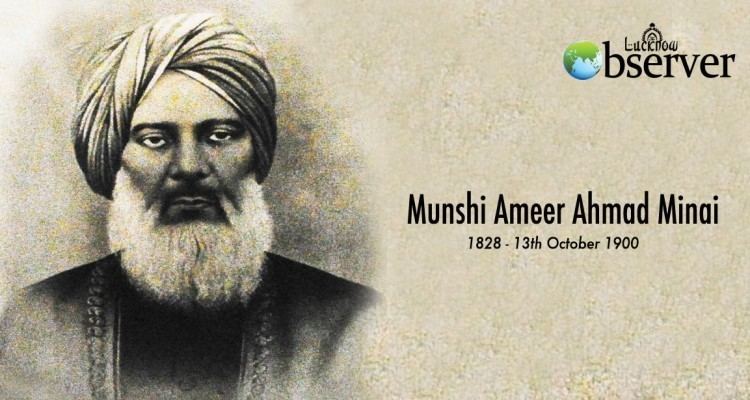
HINDUSTANI LYRICS - Munshi Ameer Ahmad Minai (1828 - 1900 ) - Rendered from Urdu by Inayat Khan and Jessie Duncan Westbrook (1918 )


Of the many languages of India, Urdu (Hindustani) is the most widely known, especially in Upper India. Both as a written and a spoken language it has a reputation throughout Asia for elegance and expressiveness. Until the time of Muhammad Shah, Indian poetry was written in Persian. But that monarch, who mounted the throne of Delhi in 1719, greatly desired to make Urdu the vogue, and under his patronage and approval, Hatim, one of his ministers, and Wali of the Deccan, wrote Diwans in Urdu. This patronage of poets was continued by his successors, and exists indeed to the present day; and the cultivation of Urdu poetry has always been encouraged at the many Courts of India. Some of the Indian Rulers are themselves poets, and find their duty and pleasure in rewarding with gifts and pensions the literary men whose works they admire. The Court of Hyderabad has for long had a circle of poets: the late Nizam was himself eminent as a writer of verse. The Maharaja-Gaekwar of Baroda is a generous patron of literary men, and the present Rulers of lesser States such as Patiala, Nabha, Tonk, and Rampur, are deeply interested in the cultivation of poetry in their Dominions.

In the eighteenth and nineteenth centuries many towns in India had extensive and flourishing literary coteries, and it is from the poets Of that period that this handful of verses is gathered. The Mushaira - a poetical concourse, wherein rival poets meet to try their skill in a tournament of verse - is still an institution in India. Delhi, Agra, Lucknow, Lahore, Cawnpore, Allahabad, Benares, Calcutta, and Hyderabad, have all been, and some still are, nests of singing birds. Of the extent of Urdu literature some idea may be gained from the fact that a History of it written about 1870 gives the names of some three thousand authors, and that Tazkiras or anthologies containing selections from many poets are very numerous.

The poetry is very varied and of great interest. It includes moral verses and counsels, sometimes in intermingled verse and prose; heroic poems telling the old tales of the loves of Khusru and Shirin, of Yusuf and Zuleika, of Majnun and Leila, and the romances of chivalry; elegies on the deaths of Hasan and Hussein, and of various monarchs; devotional poems in praise of Muhammad and the Imams; eulogies of the reigning Ruler or other patron or protector of the poor; satires upon men and institutions, sometimes upon Nature herself, specially upon such phenomena as heat, cold, inundations and pestilence; descriptive verse relating to the seasons and the months, the flowers and the trees. Above all there is a great wealth of love poetry, both secular and mystic, where, in impassioned ghazals or odes, the union of man with God is celebrated under various allegories, as the bee and the lotus, the nightingale and the rose, the moth and the flame.


AMIR


I


Thou, Sorrow, wilt keep and wilt cherish the memory of me
         Long after my death,
For thou dwelt at my heart, and my blood nourished thee,
         Thou wert warmed by my breath.


My heart has disgraced me by clamour and wailing for years
         And tossing in pain,
Mine eyes lost their honour by shedding these torrents of tears
         Like fast-falling rain.


O Wind of Disaster, destroy not the home of my heart
         With the blasts of thine ire,
For there I have kindled to burn in a chamber apart
         My Lamp of Desire.


II


Had I control o'er her, the dear Tormentor,
         Then might I rest;
I cannot govern her, nor can I master
         The heart within my breast.


I cast myself upon the ground in anguish
         Wounded and sore,
Yet longed to have two hearts that she might pierce them,
         That I might suffer more.


Utterly from her heart hath she erased me,
         No marks remain,
So there shall be no grave from which my ashes
         May greet her steps again.


O cruel One, when once your glances smote me,
         Why turn your head?
It were more merciful to let their arrows
         Pierce me and strike me dead.


No tomb, Amir, could give my dust oblivion,
         No rest was there:
And when they told her I had died of sorrow,
         She did not know - nor care.


III


This Life is less than shadows; if thou yearn
         To know and find the God thou worshippest,
From all the varying shows of being turn
         To that true Life which is unmanifest.


Beware, O travellers, dangerous is Life's Way
         With lures that call, illusion that deceives,
For set to snare the voyagers that stray
         Are fortresses of robbers, lairs of thieves.


The seer's eyes look on the cup of wine
         And say - We need no more thy drunkenness;
An exaltation that is more divine,
         Another inspiration, we possess.


O praise not peacock youth; it flits away
         And leaves us but the ashes of regret,
A disappointed heart, a memory,
         An empty foolish pride that lingers yet.


Upon the path, Amir, we journey far,
         Weary the road where mankind wandereth;
O tell me, does it lead through Life's bazar,
         Or is it the dread gate and house of Death?


IV


Here can my heart no longer rest;
         It tells my happy destiny,
Towards Medina lies my quest,
         The Holy Prophet summons me.


I should not marvel if for flight
         Upon my shoulders wings should start,
My body is so gay and light
         With this new gladness in my heart.


My weary patience nears its end;
         Unresting heart, that yearns and loves,
Convey me far to meet my friend
         Within Medina's garden groves.


My spirit shall not faint nor tire,
         Although by many tender bands
My country holds me, I desire
         The journey through the desert sands.


By day and night forever now
         I burn in Love's hot furnace breath,
Although there gather on my brow
         The cold and heavy sweats of death.


And ever in my home in Hind
         At dawn's first light, at evenfall,
I hear upon the desert wind
         The Prophet of Arabia call.


V

The light is in mine eyes,
Within my heart I feel Thy joy arise,
From gate to inmost shrine
This palace of my soul is utterly Thine.


O longing seeking eyes,
He comes to you in many a varied guise,
If Him you cannot find
The shame be yours, O eyes that are so blind.


I as His mirror glow
Bearing His image in my heart, and know
That glowing clear in His
The image of my heart reflected is.


O drink the Wine of Love,
And in the Assembly of Enlightened move,
Let not the darkness dim
Fall like a curtain 'twixt thy soul and Him.


Who gives away his soul
Forgets his petty self and wins the whole,
Losing himself outright
He finds himself in the Eternal Light.


Crazy art thou, Amir,
To wait before His gate in hope and fear;
For never in thy pain
Shall He yield up thy ravished heart again.


VI


   How can I dare profess
I am the lover whom Thou dost prefer!
Thou art the essence of all loveliness,
And I Thy very humblest worshipper.


         Upon the Judgment Day
So sweet Thy mercy shall to sinners prove,
That envying them even the Saints shall say - 
Would we were sinners thus to know Thy love!


         When in the quest for Thee
The heart shall seek among the pious throng,
Thy voice shall call - If Thou desirest me
Among the sinners I have dwelt for long.


         At the great Reckoning
Mighty the wicked who before Thy throne
Shall come for judgment; little can I bring,
No store of good nor evil deeds I own.


         Among the thorns am I
A thorn, among the roses am a rose,
Friend among friends in love and amity,
         Foe among foes.


VII


I shall not try to flee the sword of Death,
         Nor fearing it a watchful vigil keep,
It will be nothing but a sigh, a breath,
         A turning on the other side to sleep.


Through all the close entanglements of earth
         My spirit shaking off its bonds shall fare
And pass, and rise in new unfettered birth,
         Escaping from this labyrinth of care.


Within the mortal caravan-serai
         No rest and no abiding place I know,
I linger here for but a fleeting day,
         And at the morrow's summoning I go.


What are these bonds that try to shackle me?
         Through all their intricate chains my way I find,
I travel like a wandering melody
         That floats untamed, untaken, on the wind.


From an unsympathetic world I flee
         To you, your love and fellowship I crave,
O Singers dead, Sauda and Mushafi,
         I lay my song as tribute on your grave.


AMIR: Amir Minai of Rampur  or  Munshi Ameer Ahmad Minai (1828  - 1900 )  one of the best poets of the latest period: a great mystical poet: his Qasidahs for Muhammad are sung by devotees: Court poet of Rampur: travelled to Mecca and Medina, and, after the death of his patron, Nawab Kalbe Ali Khan, came to Hyderabad on hearing of the Nizam's fame and interest in poetry: rival of Dagh, by whose side he lies buried in Hyderabad.


https://alchetron.com/cdn/amir-meenai-e616b9b6-5b5f-48a8-a0df-c3729d53ecd-resize-750.jpeg