Friday, September 11, 2020

HINDUSTANI LYRICS - Munshi Ameer Ahmad Minai (1828 - 1900 ) - Rendered from Urdu by Inayat Khan and Jessie Duncan Westbrook (1918 )


Of the many languages of India, Urdu (Hindustani) is the most widely known, especially in Upper India. Both as a written and a spoken language it has a reputation throughout Asia for elegance and expressiveness. Until the time of Muhammad Shah, Indian poetry was written in Persian. But that monarch, who mounted the throne of Delhi in 1719, greatly desired to make Urdu the vogue, and under his patronage and approval, Hatim, one of his ministers, and Wali of the Deccan, wrote Diwans in Urdu. This patronage of poets was continued by his successors, and exists indeed to the present day; and the cultivation of Urdu poetry has always been encouraged at the many Courts of India. Some of the Indian Rulers are themselves poets, and find their duty and pleasure in rewarding with gifts and pensions the literary men whose works they admire. The Court of Hyderabad has for long had a circle of poets: the late Nizam was himself eminent as a writer of verse. The Maharaja-Gaekwar of Baroda is a generous patron of literary men, and the present Rulers of lesser States such as Patiala, Nabha, Tonk, and Rampur, are deeply interested in the cultivation of poetry in their Dominions.

In the eighteenth and nineteenth centuries many towns in India had extensive and flourishing literary coteries, and it is from the poets Of that period that this handful of verses is gathered. The Mushaira - a poetical concourse, wherein rival poets meet to try their skill in a tournament of verse - is still an institution in India. Delhi, Agra, Lucknow, Lahore, Cawnpore, Allahabad, Benares, Calcutta, and Hyderabad, have all been, and some still are, nests of singing birds. Of the extent of Urdu literature some idea may be gained from the fact that a History of it written about 1870 gives the names of some three thousand authors, and that Tazkiras or anthologies containing selections from many poets are very numerous.

The poetry is very varied and of great interest. It includes moral verses and counsels, sometimes in intermingled verse and prose; heroic poems telling the old tales of the loves of Khusru and Shirin, of Yusuf and Zuleika, of Majnun and Leila, and the romances of chivalry; elegies on the deaths of Hasan and Hussein, and of various monarchs; devotional poems in praise of Muhammad and the Imams; eulogies of the reigning Ruler or other patron or protector of the poor; satires upon men and institutions, sometimes upon Nature herself, specially upon such phenomena as heat, cold, inundations and pestilence; descriptive verse relating to the seasons and the months, the flowers and the trees. Above all there is a great wealth of love poetry, both secular and mystic, where, in impassioned ghazals or odes, the union of man with God is celebrated under various allegories, as the bee and the lotus, the nightingale and the rose, the moth and the flame.



AMIR


I


Thou, Sorrow, wilt keep and wilt cherish the memory of me
         Long after my death,
For thou dwelt at my heart, and my blood nourished thee,
         Thou wert warmed by my breath.


My heart has disgraced me by clamour and wailing for years
         And tossing in pain,
Mine eyes lost their honour by shedding these torrents of tears
         Like fast-falling rain.


O Wind of Disaster, destroy not the home of my heart
         With the blasts of thine ire,
For there I have kindled to burn in a chamber apart
         My Lamp of Desire.


II


Had I control o'er her, the dear Tormentor,
         Then might I rest;
I cannot govern her, nor can I master
         The heart within my breast.


I cast myself upon the ground in anguish
         Wounded and sore,
Yet longed to have two hearts that she might pierce them,
         That I might suffer more.


Utterly from her heart hath she erased me,
         No marks remain,
So there shall be no grave from which my ashes
         May greet her steps again.


O cruel One, when once your glances smote me,
         Why turn your head?
It were more merciful to let their arrows
         Pierce me and strike me dead.


No tomb, Amir, could give my dust oblivion,
         No rest was there:
And when they told her I had died of sorrow,
         She did not know - nor care.


III


This Life is less than shadows; if thou yearn
         To know and find the God thou worshippest,
From all the varying shows of being turn
         To that true Life which is unmanifest.


Beware, O travellers, dangerous is Life's Way
         With lures that call, illusion that deceives,
For set to snare the voyagers that stray
         Are fortresses of robbers, lairs of thieves.


The seer's eyes look on the cup of wine
         And say - We need no more thy drunkenness;
An exaltation that is more divine,
         Another inspiration, we possess.


O praise not peacock youth; it flits away
         And leaves us but the ashes of regret,
A disappointed heart, a memory,
         An empty foolish pride that lingers yet.


Upon the path, Amir, we journey far,
         Weary the road where mankind wandereth;
O tell me, does it lead through Life's bazar,
         Or is it the dread gate and house of Death?


IV


Here can my heart no longer rest;
         It tells my happy destiny,
Towards Medina lies my quest,
         The Holy Prophet summons me.


I should not marvel if for flight
         Upon my shoulders wings should start,
My body is so gay and light
         With this new gladness in my heart.


My weary patience nears its end;
         Unresting heart, that yearns and loves,
Convey me far to meet my friend
         Within Medina's garden groves.


My spirit shall not faint nor tire,
         Although by many tender bands
My country holds me, I desire
         The journey through the desert sands.


By day and night forever now
         I burn in Love's hot furnace breath,
Although there gather on my brow
         The cold and heavy sweats of death.


And ever in my home in Hind
         At dawn's first light, at evenfall,
I hear upon the desert wind
         The Prophet of Arabia call.


V

The light is in mine eyes,
Within my heart I feel Thy joy arise,
From gate to inmost shrine
This palace of my soul is utterly Thine.


O longing seeking eyes,
He comes to you in many a varied guise,
If Him you cannot find
The shame be yours, O eyes that are so blind.


I as His mirror glow
Bearing His image in my heart, and know
That glowing clear in His
The image of my heart reflected is.


O drink the Wine of Love,
And in the Assembly of Enlightened move,
Let not the darkness dim
Fall like a curtain 'twixt thy soul and Him.


Who gives away his soul
Forgets his petty self and wins the whole,
Losing himself outright
He finds himself in the Eternal Light.


Crazy art thou, Amir,
To wait before His gate in hope and fear;
For never in thy pain
Shall He yield up thy ravished heart again.


VI


   How can I dare profess
I am the lover whom Thou dost prefer!
Thou art the essence of all loveliness,
And I Thy very humblest worshipper.


         Upon the Judgment Day
So sweet Thy mercy shall to sinners prove,
That envying them even the Saints shall say - 
Would we were sinners thus to know Thy love!


         When in the quest for Thee
The heart shall seek among the pious throng,
Thy voice shall call - If Thou desirest me
Among the sinners I have dwelt for long.


         At the great Reckoning
Mighty the wicked who before Thy throne
Shall come for judgment; little can I bring,
No store of good nor evil deeds I own.


         Among the thorns am I
A thorn, among the roses am a rose,
Friend among friends in love and amity,
         Foe among foes.


VII


I shall not try to flee the sword of Death,
         Nor fearing it a watchful vigil keep,
It will be nothing but a sigh, a breath,
         A turning on the other side to sleep.


Through all the close entanglements of earth
         My spirit shaking off its bonds shall fare
And pass, and rise in new unfettered birth,
         Escaping from this labyrinth of care.


Within the mortal caravan-serai
         No rest and no abiding place I know,
I linger here for but a fleeting day,
         And at the morrow's summoning I go.


What are these bonds that try to shackle me?
         Through all their intricate chains my way I find,
I travel like a wandering melody
         That floats untamed, untaken, on the wind.


From an unsympathetic world I flee
         To you, your love and fellowship I crave,
O Singers dead, Sauda and Mushafi,
         I lay my song as tribute on your grave.


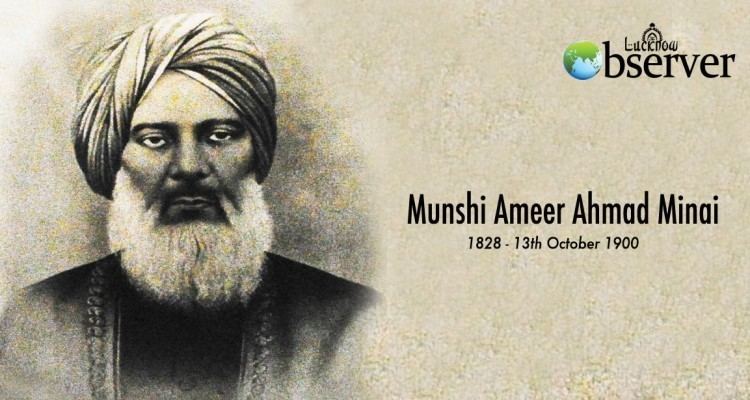
AMIR: Amir Minai of Rampur  or  Munshi Ameer Ahmad Minai (1828  - 1900 )  one of the best poets of the latest period: a great mystical poet: his Qasidahs for Muhammad are sung by devotees: Court poet of Rampur: travelled to Mecca and Medina, and, after the death of his patron, Nawab Kalbe Ali Khan, came to Hyderabad on hearing of the Nizam's fame and interest in poetry: rival of Dagh, by whose side he lies buried in Hyderabad.


https://alchetron.com/cdn/amir-meenai-e616b9b6-5b5f-48a8-a0df-c3729d53ecd-resize-750.jpeg


TWO FRIENDS - by Eddie Garcia


TWO  FRIENDS  

by Eddie  Garcia 


She touches his heart like no other,
a love he wants to discover...
a friend to him from the very start,
so much he doesn't want to break her heart...


Feelings are growing every day,
wanting to express and simply say...
whats on his mind and what is real,
for a friend ; whats true he feels...


Happiness shines among st the two,
togetherness lies a glow so true...
feelings so strong for one another,
hoping someday to be his lover...


She brightens the day when she walks by,
he touches her heart like no other guy...
mutual feelings and beating hearts,
friends forever that won't depart...


Looking forward to what lies each day,
in the busy lives of they...
forever happy and always together,
two friends in love with each other... 


Monday, September 7, 2020

EGESKOV CASTLE - DENMARK

 https://gunnebocdnprod01.azureedge.net/medialibrary/Sites/business-units/entrancecontrol/Images/Customer%20cases/egeskov-castle.jpg


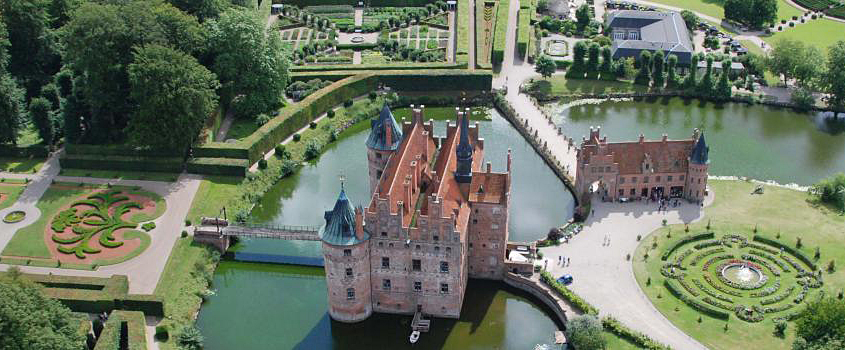
You haven't been to a fairy tale for a long time ? There is a chance to visit. To do this, you need to come to Denmark, to the city of Odense. There you can visit the house of the main and most beloved storyteller Andersen. The city itself, located on the island of Funen, is also interesting. And even more interesting is the castle of Egeskov, rising right out of the water. The castle sits on oak stilts in the middle of the lake and was once a solid military fortification, but today it is a favorite spot for tourists and locals alike. The castle houses very curious and not quite ordinary museums, and around the castle there is a garden, where you can have picnics. Each year, about 200,000 people visit the water castle. 


Egeskov Castle (Danish: Egeskov Slot) is located near Kværndrup, in the south of the island of Funen, Denmark. The castle is Europe's best preserved Renaissance water castle. 

Egeskov was first mentioned in 1405. The castle structure was erected by Frands Brockenhuus in 1554.

Due to the troubles caused by the civil war known as the Count's Feud, general civil unrest, and a civil war introducing the Protestant Reformation, most Danish noblemen built their homes as fortifications. The castle is constructed on oaken piles and located in a small lake with a maximum depth of 5 metres (16 ft). Originally, the only access was by means of a drawbridge. According to legend, it took an entire forest of oak trees to build the foundation, hence the name Egeskov (oak forest).

The estate has belonged to the Bille-Brahe family since 1784, when they acquired it from descendants of the Brockenhuus family. In 1882 it was inherited by the counts Ahlefeldt-Laurvig-Bille who are still presently owning it. 


Outside, the castle is a Late Gothic building. Inside the original elements already show Renaissance design.

The castle consists of two long buildings connected by a thick double wall, allowing defenders to abandon one house and continue fighting from the other. The double wall is over one meter thick and contains secret staircases and a well. Defenders were able to attack an enemy's flanks from the two round corner towers. Other medieval defences include artillery ports, scalding holes and arrow slits. The bricks composing the castle are of an oversized medieval type sometimes called "monks bricks". The conical towers are constructed in a series of separate panels.

The architecture includes depressed and round-arched windows, round-arched blank arcading within the gables, and a double string course between the high cellar and the ground floor. The structure contains some of the early indoor plumbing design first used in Europe with vertical shafts for waste. The thick double wall also contains a water well which is accessed from the servants kitchen in the east house. Several of the large rooms have massive parallel exposed beams with some end carving.


Contents of the castle include a massive iron chest from at least as early as the 16th century, which derived from Hvedholm Castle, a property earlier owned by the Egeskov estate about ten kilometers to the west.

Numerous oil paintings are found within the castle including a large painting in the great hall on the first floor of Niels Juel, who defeated the Swedish force in the Battle of Køge Bay in the year 1677


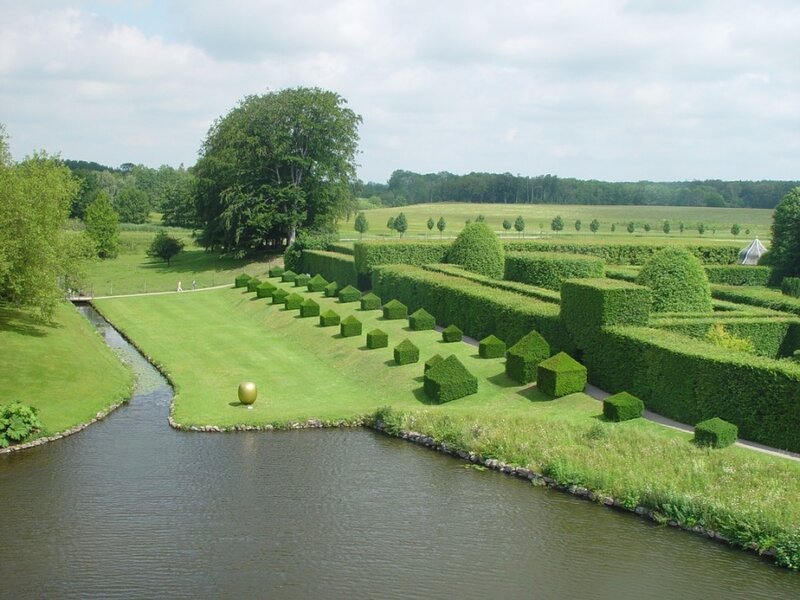
Other buildings belonging to Egeskov include Ladegården, a thatched half-timbered building which is now part of the museum. Other buildings are used by the museum and for farming. Surrounding the castle is an old park, covering 20 hectares (49 acres) of land. The park is divided into a number of gardens. The renaissance garden features fountains, a gravel path and topiary figures. The fuchsia garden, one of the largest in Europe, contains 104 different species. Other gardens near the castle include an English garden, a water garden, an herb garden, a vegetable garden, and a peasant's garden (bondehave). The gardens also feature four hedge mazes. The oldest is a beech maze several hundreds of years old. This garden is trimmed every year to prevent the trees from dying. The newest maze is the world's largest bamboo maze. It features a Chinese tower in the centre, and a bridge from the tower provides the exit from the maze. The parks feature a three-meter-tall sundial designed by Danish poet and mathematician, Piet Hein.

The estate includes an additional eight square kilometres; 2.5 square kilometres (0.97 sq mi) is forest, with the rest being farmland. In 1986, a full-sized replica of the castle was built in Hokkaidō, Japan, to hold an aquarium. This was constructed with the permission of the Egeskov's owners at the time, Count Claus and Countess Louisa Ahlefeldt-Laurvig-Bille. 


Egeskov is home to the following museums:

    - A vintage automobile collection
    - A vintage motorcycle collection
    - A collection describing the history of agriculture
    - A collection of flying vehicles
    - A collection of Falck and other emergency vehicles

Most of the castle is open to the public, except for the areas used by Count Michael and Countess Caroline Ahlefeldt-Laurvig-Bille. The museum of agriculture and the horse wagon collection is located in the building Ladegård mentioned previously.

Three large modern buildings are occupied by the vintage automobile collection, the vintage motorcycle collection, the Falck collection, and by a collection of airplanes and helicopters. The Falck collection is a collection of vehicles from the Danish rescue company, Falck, emergency vehicles such as fire trucks, ambulances, rescue boats, and other assorted emergency vehicles. 


Sunday, September 6, 2020

WHERE ARE YOU FROM ? - by Larisa Miller


WHERE ARE YOU FROM ?


by  Larisa Miller


Where are you from ?

Like everything - from mother,

From darkness, from old drama,

From happiness in half with misfortune,


From anecdote with a beard.

Well, where ?

There somewhere,

Where everything is fresh: flowers and date,


And snow, and a tree on New Year's,

And blood, and pain, and an anecdote. 


Wednesday, September 2, 2020

MY WISH FOR YOU.... - by Charlie


MY  WISH  FOR  YOU....

by  Charlie


May the angels fly down and kiss you upon the face
May they hold you in an everlasting embrace.

May the angels sing you a peaceful song
May they gently rock you all night long.

May the angels take all your worries away
May they show you a pleasant new day.

May you rise and open your eyes
May you look out your window and see the sunrise.

May the angels help guide you through the day
May they show you the right and proper way.

I ask the angels to do these things for you
For they are things that I am unable to do.

How I long to just feel you next to me
To let you know this is the way it should be.

Please know you are forever in my heart
Even though we are worlds apart.

We may be in a different time and place
But we have a love that they can't replace.


MY HEART - by Ryan Hahs


MY  HEART


by   Ryan  Hahs 


What's that faint sound that I hear?
I stop, I listen with an open ear
A drumming, beating noise I think
Is it a drip coming from my sink?


It's not but what on earth could it be?
It must be a woodpecker out in a tree
Or is it a clock just ticking away?
I can't tell for sure... I cannot say


Maybe it's closer and much more real
It seems near enough to touch or feel
I realize now how close, how true
My heart beats aloud, my love for you